How Long Does Nail Polish Last? Wear-Time Chart + How to Stop Chipping, Peeling and Bubbling
How Long Does Nail Polish Last You painted your nails on Sunday. By Tuesday there’s a chip on your index finger, by Thursday the whole thumb is lifting in one sad sheet, and somewhere in there a row of tiny bubbles surfaced on your ring finger like the polish was breathing.
None of that is bad luck. Chipping, peeling and bubbling are three separate failures with three separate causes, and once you can tell them apart you can usually fix the problem in the next manicure rather than the next ten.
Here’s the honest range for every kind of polish, how long a bottle stays good, and what to do when yours gives up early.
How Long Does Nail Polish Last? The Quick Answer
Regular nail polish lasts 3 to 7 days on the nails. Gel polish lasts 2 to 3 weeks. In the bottle, an opened lacquer is usable for roughly 18 to 24 months and an opened gel polish for 24 to 36 months.
| Type | Wear time on nails | Cured under a lamp? | Removal |
|---|---|---|---|
| Regular nail polish / lacquer | 3 to 7 days | No, air dries | Acetone or non-acetone remover |
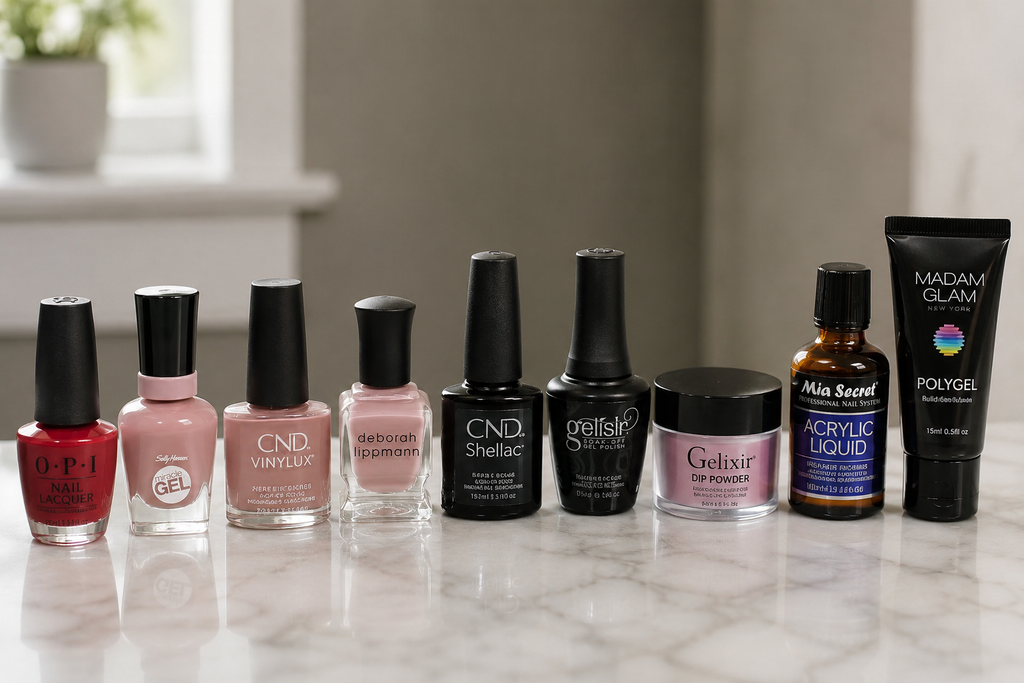
| Long-wear no-chip formulas (Sally Hansen Miracle Gel, CND Vinylux, Deborah Lippmann Gel Lab Pro) | 7 to 10 days | No | Regular remover |
| Gel polish / soak-off gel | 2 to 3 weeks | Yes, UV or LED lamp | 10 to 15 min acetone soak, foil wraps |
| Shellac (CND, Creative Nail Design) | 10 days to 2 weeks | Yes | Soak off |
| Dip powder | 3 to 4 weeks, sometimes 5 | No lamp needed | Longer acetone soak |
| Acrylic nails | 2 to 4 weeks before fills | No | Soak or file off |
| Polygel / builder gel | Up to 3 weeks | Yes | File and soak |
| Press-on nails | 5 days to 2 weeks | No | Oil or glue remover |
One thing worth clearing up straight away: Shellac is not a separate category. It’s a gel polish brand from Creative Nail Design that got popular early enough for the name to become the generic term, the way people say Kleenex for tissue. Same curing process, same soak-off removal.
How Long Does Regular Nail Polish Last on Your Nails?
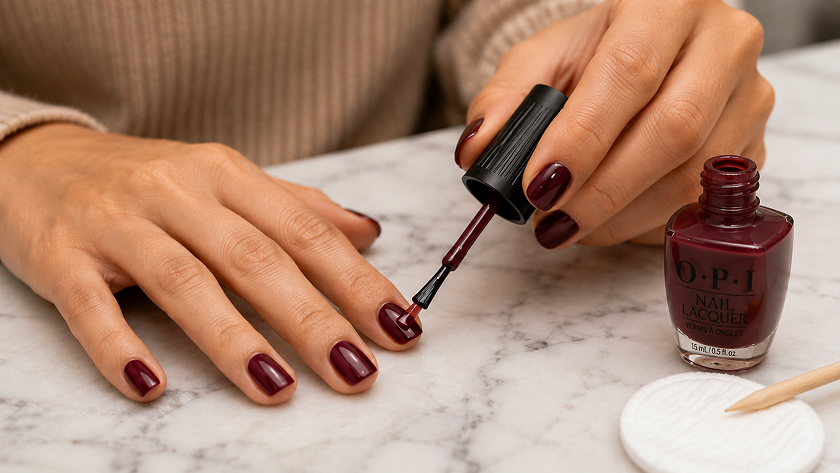
Three to seven days is the realistic window for traditional polish. If you’re careful, use a proper base coat and top coat, and don’t spend your week scrubbing pans, you can stretch it to 10 days. If you skip the base coat, expect chips inside 48 hours.
Regular nail polish works by solvent evaporation. The solvents carry pigment, resin and plasticizers onto the nail plate, then leave, and what stays behind is a flexible coloured film. Nothing chemically bonds that film to your nail. It’s gripping, not welding, which is exactly why wear time is so sensitive to what your hands do all day.
What actually changes your 3 to 7 days
- Hands in water. This is the biggest one. Your natural nail absorbs water and expands, then contracts as it dries. The polish film doesn’t flex at the same rate, so it cracks and starts peeling.
- Household chemicals. Dish soap, bleach and cleaning sprays break the bond between the polish and the nail plate. Gloves genuinely add days.
- Nail condition. Brittle nails, peeling nails and dry cuticles hold polish badly. Healthy, hydrated keratin holds it well.
- Polish quality and age. A thick, gloopy bottle that’s lost half its solvents will never lay down evenly, and uneven film chips first.
- Whether you re-seal. A fresh thin layer of top coat every 2 to 3 days, wrapped over the free edge, is the cheapest chip-resistant trick there is.
How Long Does Gel Nail Polish Last?
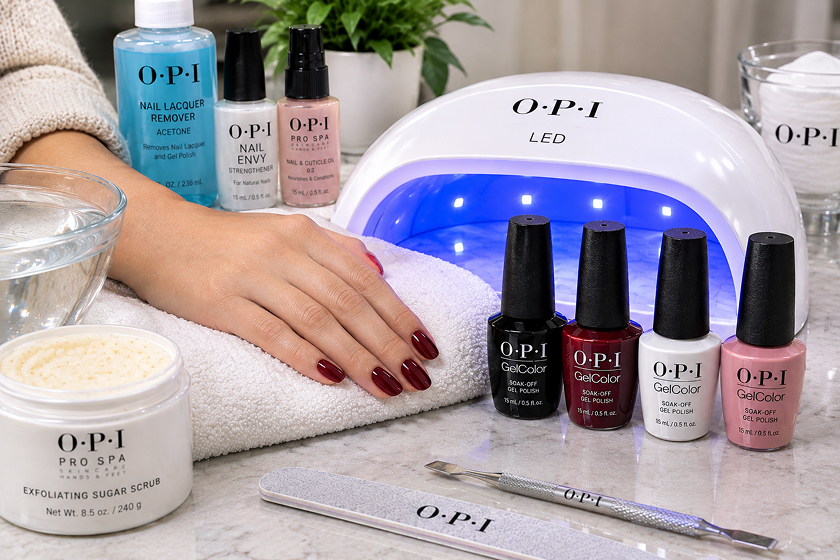
Gel nail polish lasts 2 to 3 weeks. Ten days is a poor result, 21 days is an excellent one, and anything past three weeks usually looks grown out rather than chipped, because the gap at the cuticle line from nail growth becomes obvious long before the colour fails.
Gel polish lasts longer because it doesn’t dry, it cures. Acrylic monomers and oligomers in the formula link into hard polymers when they’re exposed to a UV/LED light, which takes 30 to 60 seconds a layer. What you end up with is a hard, chemical-resistant coating sitting on the nail rather than a soft film sitting on it.
Why your gel dies at day 6 instead of day 21
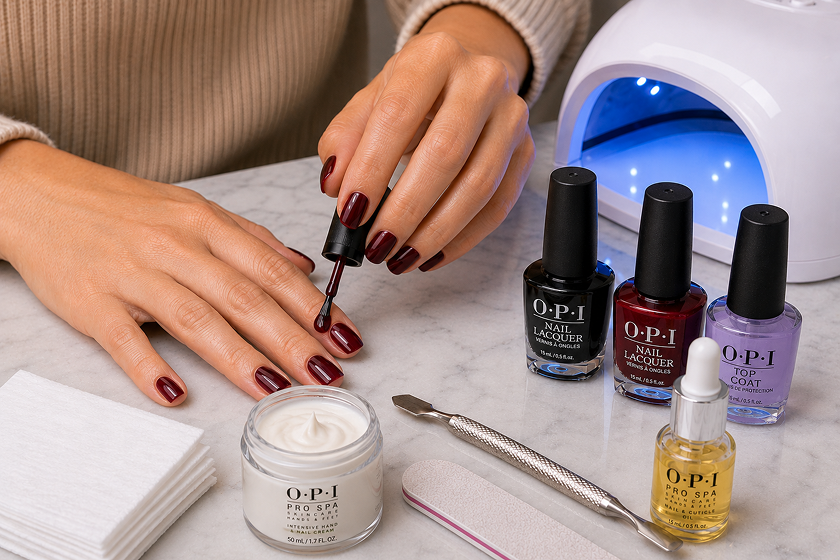
Almost every short gel manicure traces back to one of these:
- Undercured layers. Thick coats, dark pigments and thumbs held at the wrong angle all under-cure. The surface hardens, the underside stays soft, and the whole layer starts lifting as the nail flexes.
- Free edge not capped. If you don’t wrap each layer over the tip, water gets under the edge and works backwards.
- Nail flexibility. Very thin, bendy natural nails move more than the cured gel can, and that stress shows up as peeling.
- Mixed brands. A base coat from one line, colour from another, top coat from a third. The chemistries don’t always agree, and the failure looks like peeling rather than chipping.
- Nail prep skipped. More on this below, but this is the single biggest one.
Worth knowing: constant back-to-back sets with aggressive removal (filing, drilling, long acetone soaks) leave the nail plate more porous, and a porous nail holds gel worse than a healthy one. Two weeks off every few months isn’t precious, it’s maintenance.
How Long Does Nail Polish Last in the Bottle?
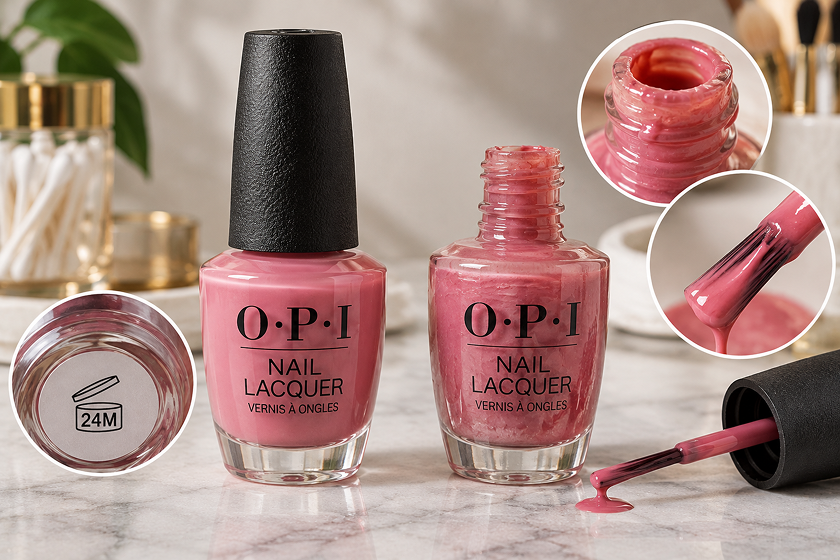
An opened bottle of regular nail polish stays good for roughly 18 to 24 months. An opened gel polish stretches to 24 to 36 months, because gel doesn’t harden from air exposure, only under a lamp. Unopened, both last considerably longer.
Opened vs unopened, and why you’ll see different numbers
Search this and you’ll find “2 years,” “3 years” and “5 to 8 years” quoted with equal confidence. They’re not really contradicting each other, they’re describing different things.
There is no legally mandated expiration date on nail polish, and the FDA doesn’t set a shelf life for it. So brands publish a Period After Opening figure instead, shown as the little open-jar PAO symbol with a number and an M on it. 24M means 24 months of expected usability after the first time you open it.
- Unopened, stored well: 3 years and up. Some bottles survive far longer because the seal stops solvent evaporation entirely. That’s where the 5 to 8 year figure comes from.
- Opened: 18 to 24 months for lacquer, 24 to 36 for gel.
- Opened and stored in a bathroom: often under a year, because humidity and temperature swings from showers wreck it.
Polish doesn’t spoil the way food does. It degrades. It won’t hurt you, it’ll just apply badly, and badly-applying polish is exactly what causes bubbling and early chipping.
Six signs a bottle is done
- It’s thick, gloopy or stringy and drags instead of flowing.
- Separation that won’t recombine. Some settling of pigment is normal, and rolling the bottle between your palms fixes it. If it stays in layers, the formula has broken down.
- Visible clumping or grit that won’t dissolve.
- The colour has shifted or gone dull.
- A sharp chemical odour that’s noticeably different from new.
- It applies fine but chips or peels within a day. Old polish loses adhesion long before it looks bad.
If it’s just thickened, a few drops of proper polish thinner will restore the viscosity. Never use acetone or nail polish remover for this. Remover dissolves the resin and permanently ruins the formula.
Storage that actually adds months
- Store bottles upright in a cool, dark place with the cap sealed tight. A bedroom drawer, not the bathroom shelf.
- Wipe the neck of the bottle with a little acetone on a lint-free wipe before capping, so the cap seats properly and air stays out.
- Keep them out of direct sunlight and away from radiators.
- Some manicurists keep polish in a beauty fridge. It’s genuinely effective for colour stability, but let bottles come back to room temperature before you paint or you’ll get bubbles.
Chipping vs Peeling vs Bubbling: Read Your Manicure First
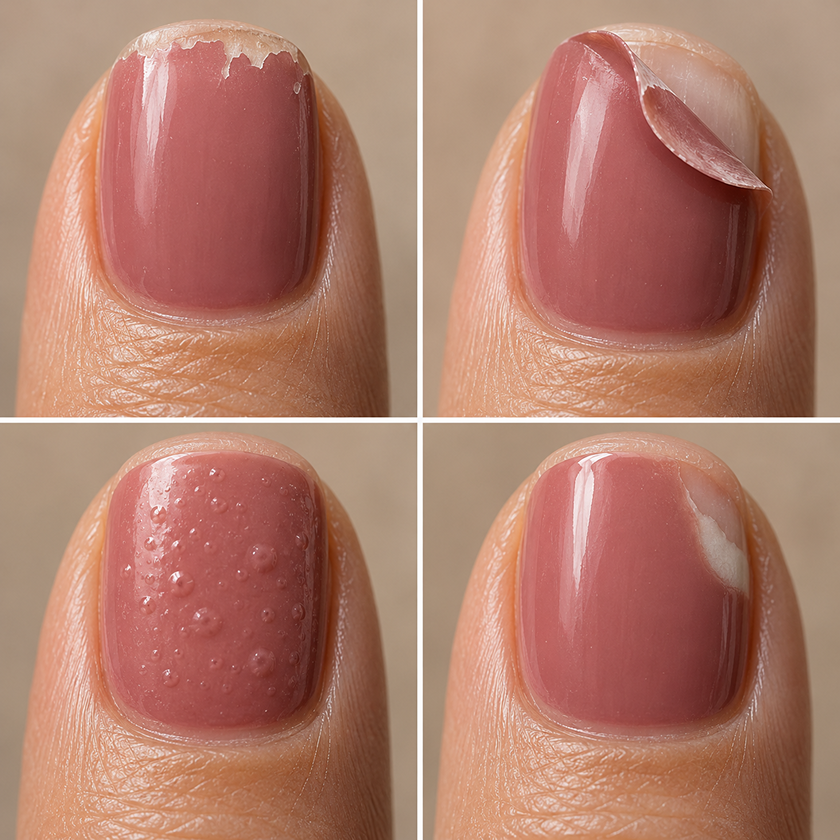
This is the part almost nobody explains, and it saves you from fixing the wrong thing.
| What you see | What it actually is | Where the problem happened |
|---|---|---|
| Small breaks at the tip, colour worn thin | Chipping | Wear and impact. Free edge not sealed, no top coat refresh |
| Polish comes off in one intact sheet or flake | Peeling or lifting | Adhesion failure. Bad nail prep, oil or moisture under the polish |
| Tiny domes and bumps rising through the colour | Bubbling | Trapped air. Thick coats, shaking, heat, rushing between layers |
| White patches under gel near the edge | Lifting | Gel has separated from the nail plate. Water can get underneath |
Chipping is a durability problem. Peeling is a bonding problem. Bubbling is a drying problem. Different fixes entirely.
Why Does My Nail Polish Peel Off?
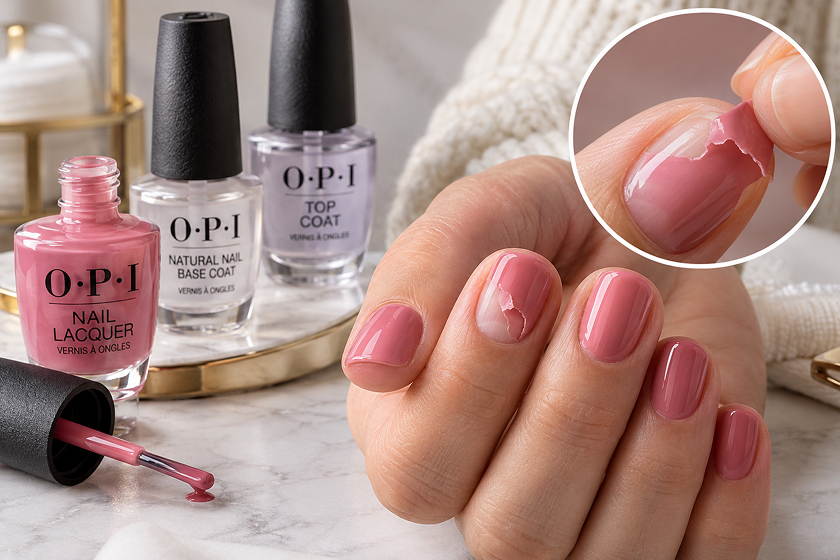
When regular polish peels away in one piece instead of chipping at the tip, the polish never bonded properly in the first place. Five usual suspects:
Oil and moisture on the nail plate. Your natural nails produce oil, and so does everything else your hands touch: hand cream, cuticle oil, moisturiser, leftover conditioner. Any of it under the polish acts as a barrier. Wipe every nail with rubbing alcohol or acetone on a lint-free wipe immediately before the base coat, even if your nails look clean.
Nails full of water. Painting straight after a shower or a long soak is a guaranteed peel. Wet keratin is swollen. As it dries and contracts over the next few hours, the polish film on top has nowhere to go but off. Wait an hour after any soak.
No base coat. The base coat isn’t optional filler. It’s the layer designed to grip the nail plate on one side and the colour on the other. Skipping it removes the only real adhesion in the system.
Peeling or damaged nails underneath. If the nail plate itself is flaking in layers, the polish is bonded to a surface that’s already coming apart. No application technique fixes this. Cuticle oil daily and a nail strengthener for a few weeks will.
Environment. High humidity keeps polish soft and sticky so it never fully sets. Heat dries the surface too fast and leaves a brittle film. Both end in peeling. Paint in a moderate, well-ventilated room.
Why Does My Gel Nail Polish Peel Off?
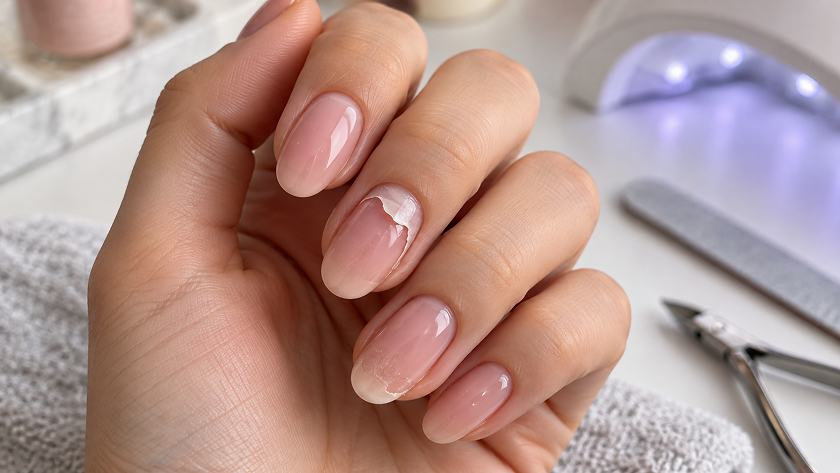
Gel peeling has a different profile. Gel doesn’t wear away gradually, it lifts in defined sections, usually starting at the cuticle line or the tips, and often showing as a white or cloudy patch first.
The nail wasn’t dehydrated. This is the number one cause. After you push back the cuticle and lightly buff, the nail plate has to be wiped with alcohol or a nail dehydrator to strip oil, moisture and dust. Washing your hands right before application undoes all of it.
Invisible cuticle left on the plate. There’s a thin, transparent layer of non-living tissue that grows out onto the nail from the cuticle area. You often can’t see it. Gel bonds to the nail plate, not to skin, so any of that left behind creates lifting that starts at the base. A cuticle pusher worked gently around the nail folds and sidewalls solves it.
Gel flooding the skin. Colour touching the cuticle or sidewalls creates a weak edge that catches on everything and pulls the whole layer up. Leave a hairline margin around every edge.
Coats too thick to cure through. Thick gel cures on top and stays soft underneath. Two or three thin layers, cured fully between each, beat one heavy layer every time. Dark colours and thumbs need extra attention under the LED lamp.
The free edge wasn’t capped. Wrap every layer, including base coat and top coat, over the tip of the nail. This one habit is the single biggest difference between a 10-day and a 21-day gel manicure.
Old or mismatched product. Gel polish past its shelf life may not cure or adhere correctly. So can mixing product lines. Keep base, colour and top coat from one system where you can.
Buffing skipped. A very light pass with a 180 to 220 grit file, in one direction, gives the surface enough texture to grip. Light. You’re taking the shine off, not thinning the nail.
Why Does My Nail Polish Bubble?
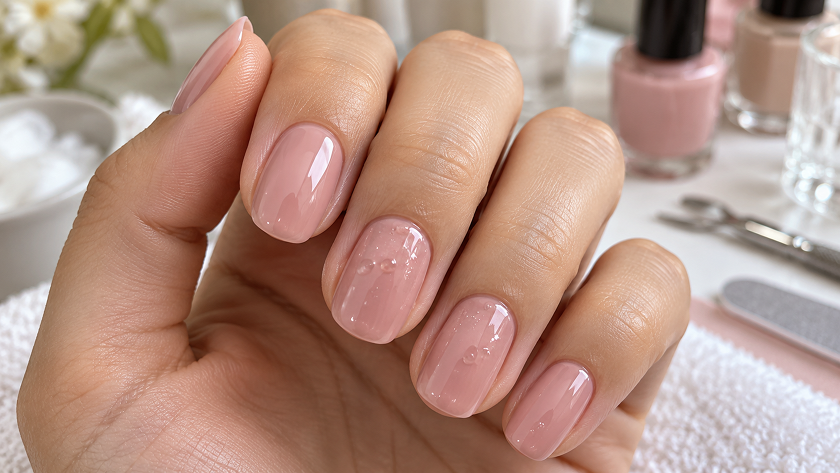
Bubbles are air pockets trapped inside the film. They form when the surface of a coat sets before the layer underneath has finished, so the solvents and air still trying to escape get sealed in and rise as domes.
The causes, in rough order of how often they’re the culprit:
Shaking the bottle. Shaking whips air straight into the formula, and it goes onto your nail. Roll the bottle slowly between your palms instead, then let it settle for a minute.
Coats applied too thick. A heavy layer sets on top and stays wet beneath. That mismatch is the classic bubble generator. Thin coats, always.
Rushing between layers. Polish that looks dry can still be soft underneath. Give each coat 2 to 3 minutes, longer in humidity or with a thicker formula.
Heat and humidity. Warmth speeds solvent evaporation so the top skins over early. Painting in a hot room or direct sun makes bubbles much more likely.
Blowing on your nails, or using a fan. Both dry the surface too fast and blowing adds moisture from your breath. Quick-dry drops applied too early do the same thing.
Overworking the brush. Pressing hard or going back over the same stripe repeatedly to fix a streak drags air into the wet layer. Two or three light strokes per nail, then leave it. Most small imperfections level themselves out as polish dries. Bubbles don’t.
Old, thickened polish. Once solvents have escaped, the remaining formula is too viscous to release trapped air before it sets.
Poor nail prep. Dust, oil or a bit of lotion on the nail plate creates gaps where air collects. With gel, this gets worse, because a speck of debris gets locked in permanently under the LED lamp and shows as ripples.
Contaminated brushes and dirty bottle necks. Lint or dried polish flakes reintroduce particles into an otherwise smooth top coat.
How to fix bubbles that are still wet
Catch them in the first minute and you can save the nail. Glide the brush across the surface once, lightly, with almost no pressure, to pop and level the domes. Add one thin pass of colour if the texture is still uneven. Do not keep brushing the same spot, that adds more air than it removes.
How to fix bubbles that already dried
- Wait until the polish is fully hardened, at least an hour.
- Buff the bumps flat with a fine buffer, working gently so you don’t cut through to bare nail.
- Wipe the dust off with a lint-free wipe.
- Apply one thin fresh coat of colour, then seal with top coat.
If more than two nails are badly affected, removing and repainting is faster than patching.
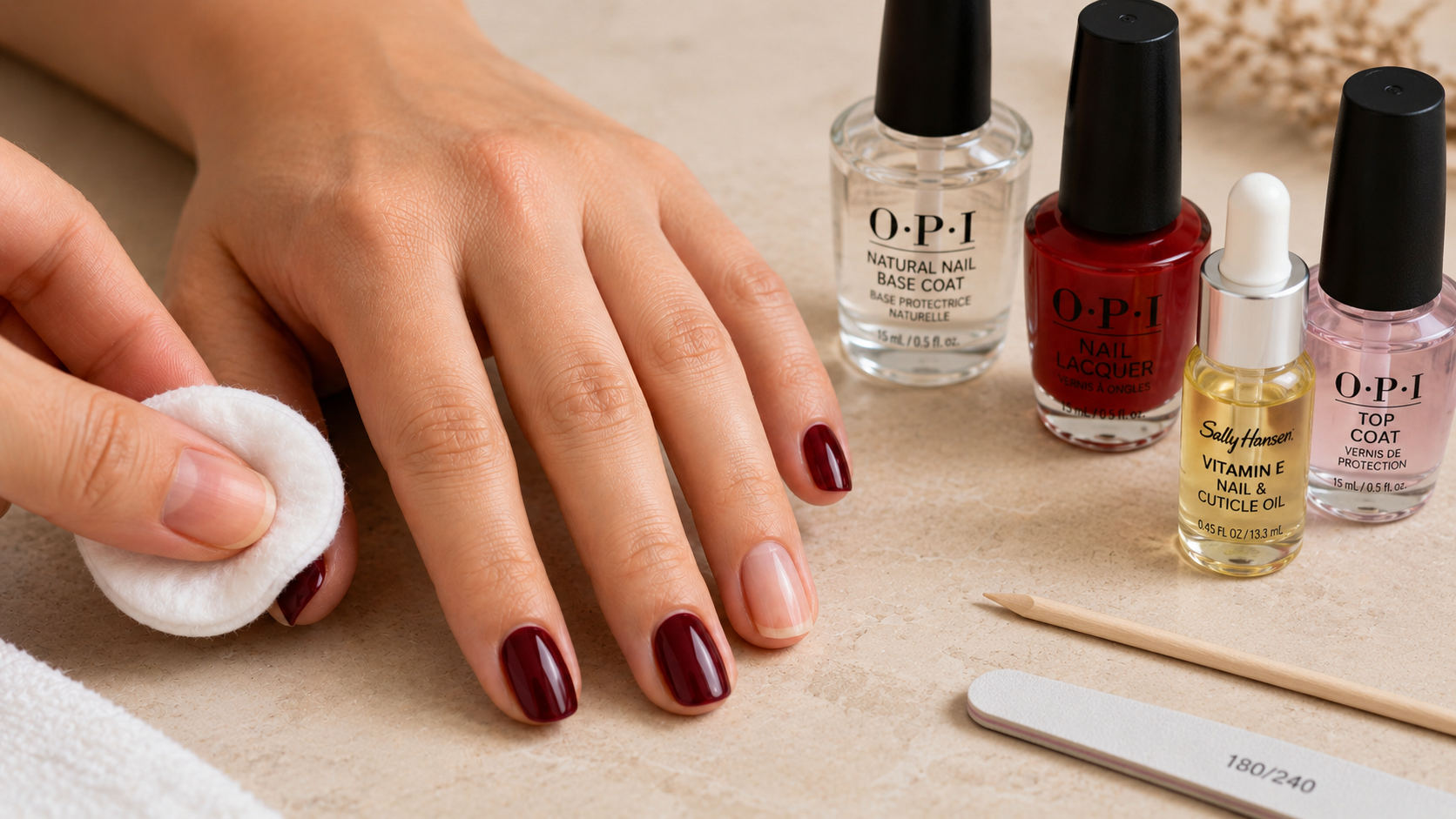
The 8-Minute Prep Routine That Fixes All Three
Most chipping, peeling and bubbling starts before any colour goes on. This sequence works for regular polish and gel alike.
- Remove old polish completely. Any residue left in the sidewalls becomes a lifting point.
- Push back cuticles gently with a cuticle pusher or orangewood stick. Never cut into living skin.
- Shape and file in one direction. Sawing back and forth splits the free edge and causes peeling nails.
- Buff lightly with a 180 to 220 grit file, just enough to remove shine. Skip this on very thin nails.
- Wipe with alcohol or a nail dehydrator on a lint-free wipe. Every nail, including under the tip.
- Do not wash your hands after this point.
- Base coat, thin, wrapped over the free edge.
- Two thin colour coats, waiting fully between them (or curing each under the UV/LED lamp if you’re using gel).
- Top coat, thin, wrapped over the free edge again.
- Cuticle oil at the end for regular polish, or 10 minutes later for gel, once everything is set.
That’s it. No step in there is optional, and the two people usually skip, the alcohol wipe and capping the free edge, are the two that matter most.
How to Make Any Manicure Last Longer
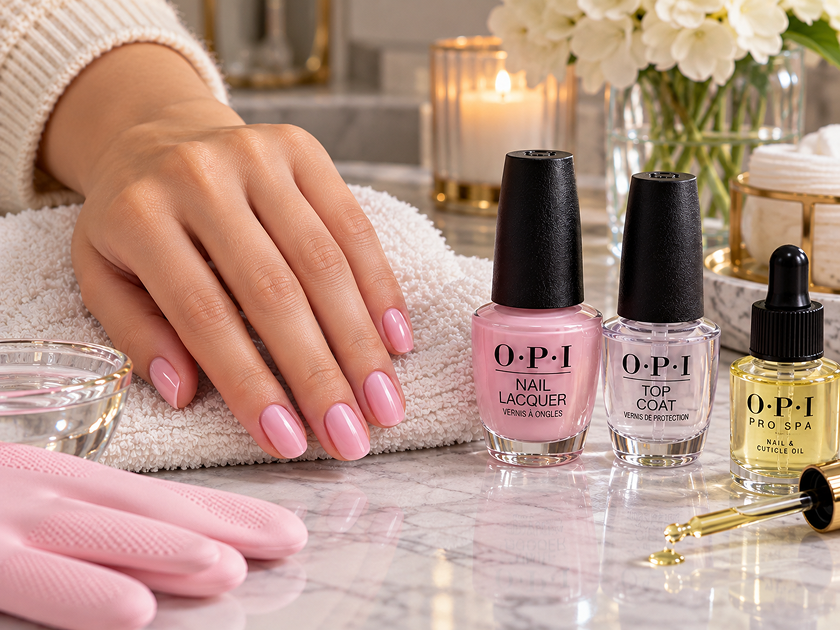
- Wear gloves for washing up and cleaning. Easily worth 3 extra days on regular polish.
- Refresh the top coat every 2 to 3 days, wrapped over the tips. This restores the chip-resistant barrier and the shine at the same time.
- Stop using your nails as tools. Opening cans, scratching labels and picking at things is what breaks the free edge seal first.
- Oil daily. Cuticle oil keeps the nail plate flexible, and a flexible nail cracks polish less. Apply after the manicure has fully set, never before.
- Avoid hot water for the first few hours. No baths, no long showers, no dishwashing on the day you paint.
- Don’t peel gel off. Picking at lifting gel takes layers of keratin with it and leaves the nail thinner and more porous for the next set. Soak it off with acetone and foil wraps, 10 to 15 minutes.
- Give nails a break between gel or dip powder sets every few months.
When Lifting Is a Nail Health Problem, Not a Polish Problem
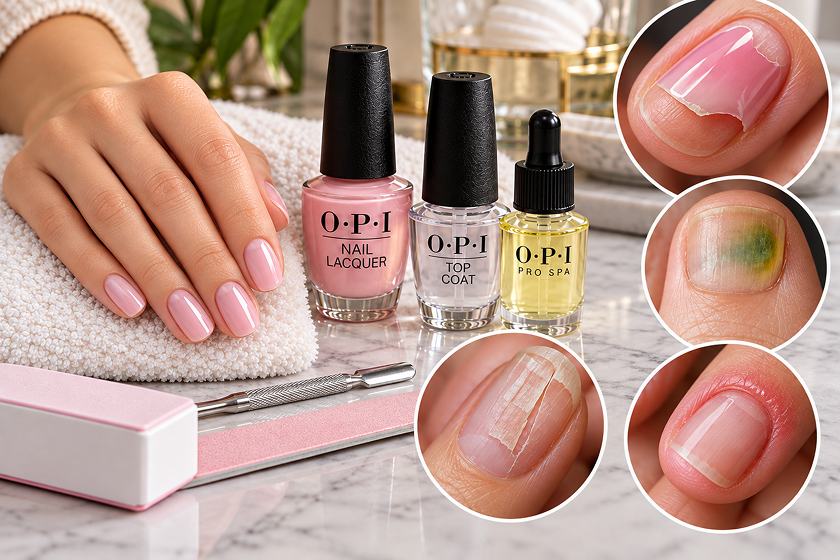
Most peeling is cosmetic. A few cases aren’t, and they’re worth recognising.
If gel has lifted and you leave it in place, moisture gets trapped between the gel and the nail plate in a warm, sealed pocket. That’s a decent environment for bacteria, and it’s how green nail discolouration (a pseudomonas stain) usually starts. If a nail under lifted gel turns green, blue-green or dark, take the product off and leave the nail bare for a while rather than repainting over it.
Also worth attention: persistent itching, redness or swelling around the nail folds after gel application can point to a methacrylate sensitivity, most commonly to HEMA, which is why HEMA-free systems exist. That’s not something to power through. A dermatologist is the right call, and once that sensitivity develops it usually doesn’t go away.
And if your nails are consistently brittle, splitting, or peeling in layers on their own with no polish involved, the polish isn’t the problem. That’s a nail-health issue worth solving first, because no amount of technique makes colour stick to a surface that’s already coming apart.